
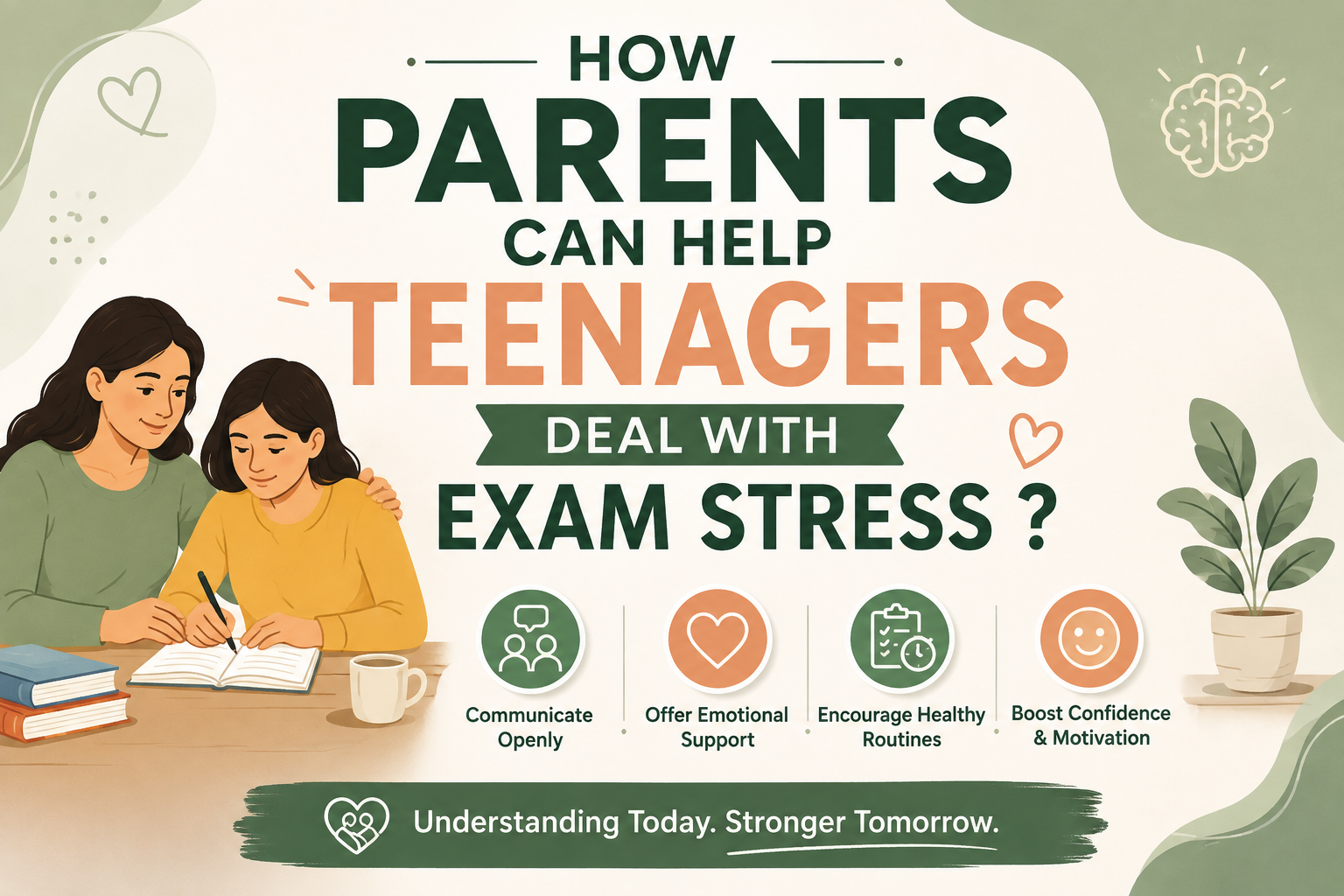
For many parents, examination season comes with a familiar routine: asking about completed chapters, checking study schedules and reminding teenagers about the importance of good marks. While these reminders usually come from concern and love, too much academic pressure can sometimes make teenagers feel overwhelmed.
Exam stress in students is common, especially when examinations are connected to expectations about marks, college admissions or future careers. A certain amount of nervousness can be normal, but when stress starts affecting a teenager’s sleep, mood, confidence or daily life, parents need to look beyond marks and understand what their child is experiencing.
What Causes Exam Stress in Students?
Examinations are not always the only reason teenagers feel stressed. Academic pressure can come from several sources, including:
- Fear of getting low marks
- Pressure to meet parental expectations
- Comparing themselves with classmates
- A heavy syllabus and limited preparation time
- Fear of failure
- Competitive examinations
- Uncertainty about future career choices
- Previous academic setbacks
- Pressure from teachers, relatives or peers
For some teenagers, the fear of disappointing their parents can become greater than the fear of the examination itself. This is why understanding the emotional side of academic stress in students is just as important as helping them prepare academically.
Signs of Exam Stress Parents Should Notice
Not every worried teenager needs counselling. Feeling nervous before an examination can be a normal response to an important event.
However, parents should pay attention when the changes become frequent or begin interfering with everyday life.
Some common signs of exam stress in students include:
- Constant worrying about examinations or marks
- Irritability or sudden anger
- Difficulty sleeping
- Loss of interest in hobbies
- Frequent headaches or stomach discomfort
- Difficulty concentrating
- Crying or emotional outbursts
- Avoiding school or examinations
- Social withdrawal
- Repeatedly expressing fear of failure
If these signs persist or become severe, it may be helpful to speak with a qualified mental health professional.
1. Listen Before Giving Advice
When a teenager says, “I am scared I will fail,” immediately saying, “You have studied enough” may not address the real concern.
Instead, ask:
“What are you most worried about?”
The answer might reveal that the teenager is not only worried about marks but also about disappointing their parents, losing confidence or being compared with friends.
Listening without immediately judging or correcting allows teenagers to feel understood. Sometimes, emotional reassurance is the first step toward reducing exam pressure on students.
2. Focus on Effort, Not Just Marks
Marks are important, but they should not become the only measure of success.
Parents can encourage teenagers by recognising consistency, improvement and effort. Instead of asking only, “How much did you score?” try asking:
- Which topic did you find difficult?
- What subject are you worried about?
- Do you need help organising your revision?
- What can make studying easier?
This approach helps teenagers see examinations as something they can prepare for rather than something that defines their worth.
3. Help Create a Realistic Study Routine
When teenagers have a large syllabus, everything can start feeling urgent. A realistic routine can make the workload feel more manageable.
Encourage:
- Short and focused study sessions
- Regular breaks
- Reasonable daily targets
- Adequate sleep
- Nutritious meals
- Physical activity
- Time away from screens
A teenager does not need to study every waking hour to succeed. Rest and recovery are also important parts of managing teenage exam stress.
4. Avoid Comparing Your Child With Others
Statements such as “Your friend scored higher” or “Why can’t you study like your cousin?” can unintentionally increase anxiety.
Every student has different strengths, learning patterns and circumstances. Comparing one teenager with another may make them feel inadequate rather than motivated.
Instead, help your child compare their current progress with their previous performance.
Progress is a healthier goal than competition.
When Should Parents Consider Counselling?
Sometimes family support is enough. However, professional guidance may be useful when exam anxiety in students becomes persistent and starts affecting their emotional or physical well-being.
Parents can consider professional support if their teenager is experiencing ongoing anxiety, severe sleep difficulties, persistent low mood, frequent emotional outbursts, difficulty functioning at school or home, or overwhelming fear surrounding examinations.
Student counselling in Coimbatore can provide teenagers with a supportive environment where they can discuss academic pressure, anxiety, self-confidence and other concerns openly.
At Adhia Foundations, counselling focuses on understanding the individual needs and emotional experiences of young people rather than treating academic performance as the only concern. Professional support can help teenagers develop healthier coping strategies and understand how to respond to pressure more effectively.
How Can Parents Support a Teenager During Exams?
Parents don’t need to remove every challenge from their child’s life. Instead, they can make home feel like a safe place to return to when things become difficult.
Simple actions can make a difference:
- Listen without immediately judging
- Avoid unnecessary comparisons
- Encourage healthy sleep and meals
- Help create manageable study goals
- Give teenagers time to relax
- Praise effort and improvement
- Take emotional changes seriously
Most importantly, remind your teenager that one examination does not determine their entire future.
Frequently Asked Questions
Is exam stress normal in teenagers?
Some nervousness before an examination is normal. It becomes a concern when stress is persistent or begins affecting sleep, mood, concentration, relationships or daily activities.
How can parents reduce academic pressure on teenagers?
Parents can reduce unnecessary pressure by listening, avoiding comparisons, focusing on effort, supporting realistic study routines and maintaining open communication.
What are the signs of exam anxiety in students?
Common signs include excessive worrying, sleep problems, irritability, difficulty concentrating, emotional outbursts, withdrawal and fear of failure.
Can counselling help students with exam stress?
Yes. Counselling can help students understand their stress triggers, develop coping strategies, manage anxious thoughts and build confidence.
When should I seek student counselling in Coimbatore?
Consider professional support when academic stress becomes difficult to manage or starts affecting your teenager’s emotional well-being, sleep, relationships or everyday functioning.
Support Your Teenager Beyond Their Marks
Examinations will always bring some pressure, but teenagers should not feel that they have to handle it alone. A supportive parent can make a significant difference by listening, encouraging healthy routines and recognising when additional support may be needed.
If your teenager is struggling with persistent academic pressure, anxiety or difficulty coping with examinations, Adhia Foundations can help you explore appropriate support. Connect with the team to understand whether exam stress counselling in Coimbatore or student counselling may be suitable for your teenager and take the first step towards healthier ways of managing academic pressure.