
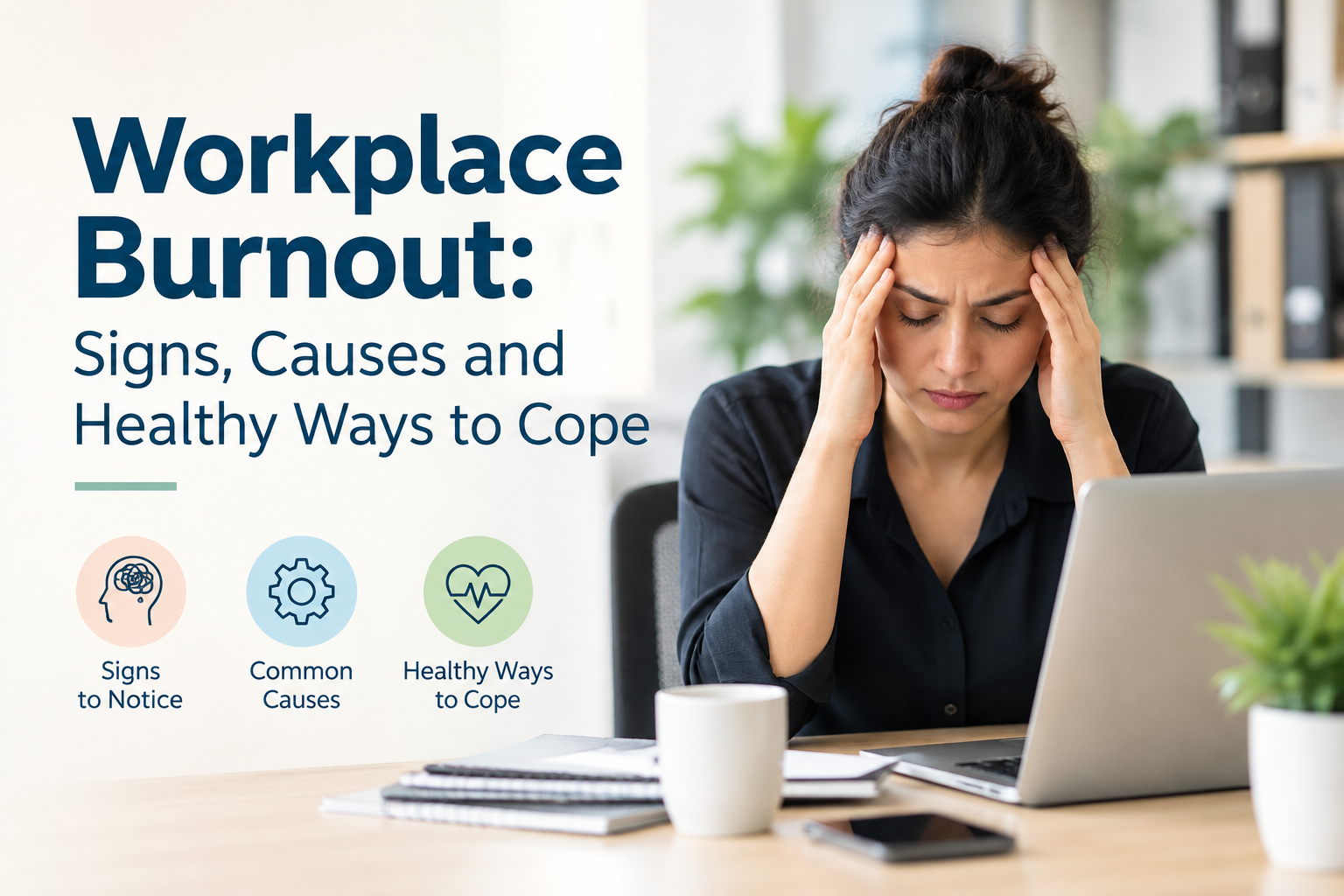
Let’s imagine a woman named Meera. She is 31 and works at a busy IT company in Coimbatore. A year ago, she enjoyed her job. Today, Sunday evenings feel heavy. She checks emails at midnight, snaps at her family over small things, and feels nothing even when a project goes well.
She tells herself, “Everyone is tired. I just need a holiday.” But after the break, the tiredness comes right back.
She tells herself, “Everyone is tired. I just need a holiday.” But after the break, the tiredness comes right back.
What Is Workplace Burnout?
The World Health Organization describes burn-out as the result of long-term stress at work that hasn’t been handled well. It lists three parts: feeling drained, feeling distant or negative about your job, and feeling less able to do your work well.
Stress feels like too much pressure. Burnout feels like having nothing left to give. Stress eases when the pressure ends, but burnout stays even after a weekend off. That is why learning work stress management early matters so much.
Signs of Workplace Burnout to Watch For
The signs of workplace burnout don’t appear overnight. They build slowly and show up in your body, your mind and your behaviour. Spotting them early is the first step of any work stress management plan.
In your body
- Feeling tired all the time, even after a full night’s sleep
- Frequent headaches, body aches or an upset stomach
- Trouble falling asleep, or waking up at 3 a.m. with work thoughts
In your mind and feelings
- Emotional exhaustion from work, feeling empty, numb or close to tears
- Dreading Monday from Sunday afternoon
- Thinking, “What’s the point of all this?”
In your behaviour
- Pulling away from colleagues, friends and family
- Missing deadlines you used to meet easily
- Leaning on extra coffee, junk food or late-night scrolling to get through the day
If you notice several of these signs for more than two or three weeks, don’t brush them aside.
Causes of Work-Related Stress: Why Does Burnout Happen?
The causes of work-related stress are rarely just one thing. Usually, a few of them pile up together:
- Too much work: heavy workload, tight deadlines and targets that keep rising
- Long hours, no real break: answering messages at night and working on weekends
- Little control: having no say in how or when your work gets done
- Unclear role: changing goals and no clear idea of what is expected
- No recognition: putting in effort that nobody notices
- Difficult relationships at work: an unsupportive boss, office politics or constant conflict
- Double responsibilities: a full day at work and a full day at home, which many working parents know well
Almost none of these say a person is “not strong enough.” Burnout is usually a gap between what the job demands and what one person can realistically give. Seeing it this way removes the guilt, and that is where good work stress management begins.
A Counsellor's View: Why Work Stress Management Needs a Practical Approach
At Adhia Foundations, the founder, Sridevi Baskaran, looks at this topic from both sides. Before becoming a psychologist and counsellor, she built a corporate career with companies such as Infosys, State Street Bank and Evergreen Investments in Boston.
That background shapes how the team at Adhia Foundations approaches work stress management: no lectures, no judgement and no “just think positive” advice. The focus is on understanding what is really draining you and finding steps that fit your real life.
Healthy Ways to Cope: Stress Management Techniques That Work
Let’s go back to Meera. She started small, and these stress management techniques helped her the most:
- Set a log-off time. Pick a time to stop work and mute office notifications after that.
- Take real breaks. Eat lunch away from your desk and walk for five minutes every couple of hours.
- Try slow breathing. When you feel tense, breathe in for four counts and out for six counts. Do this for two or three minutes.
- Protect your sleep. Keep your phone away for 30 minutes before bed.
- Move your body daily. A 20-minute walk or light yoga helps release built-up tension.
- Pick your top three. Each morning, choose the three tasks that matter most and do them first.
- Talk to someone. Share how you feel with a trusted friend, and talk to your manager about your workload using real examples.
Practised daily, these habits become a simple work stress management routine you can begin this week.
When to Consider Counselling for Work Stress
Self-help works well when stress is mild. But if the signs continue for weeks, or start affecting your sleep, health or relationships, it may be time for professional counselling for stress. You don’t need to wait for a breaking point.
Counselling for work stress is a useful part of work stress management. It gives you a private, judgement-free space to:
- Understand what is really driving your burnout
- Learn coping tools that suit your personality and your job
- Practise setting boundaries and speaking up at work
Adhia Foundations offers individual counselling in Coimbatore for stress, anxiety and burnout, along with coaching and personal growth sessions that support work-life balance. Companies that want to look after their teams can explore the wellbeing programmes by The Ahaa Company.
You can also read about how stress affects your sleep, work and relationships.
If you feel overwhelmed right now and need to talk to someone immediately, the Government of India’s Tele-MANAS helpline offers free mental health support on 14416, 24 hours a day.
Frequently Asked Questions About Work Stress Management
What is work stress management?
Work stress management means using simple habits, boundaries and support to handle job pressure before it turns into burnout. Breaks, good sleep, clear priorities and talking to someone are all part of it.
How do I know if it is normal stress or burnout?
Normal stress eases once the deadline or busy period is over. Burnout stays. If you feel drained, detached and less effective for weeks, even after rest, it may be burnout.
Can workplace burnout go away on its own?
Rest helps, but if the causes stay the same, the exhaustion usually returns. Changes in workload, boundaries and support bring lasting relief.
Is there counselling for work stress in Coimbatore?
Yes. Adhia Foundations provides individual counselling and coaching in Coimbatore for stress, anxiety and burnout. The centres are on Perks School Arch Road and in Peelamedu, open Monday to Saturday, 9 AM to 8 PM.
Conclusion
Meera’s story may sound familiar to many working people in Coimbatore and beyond. Burnout is not a sign of weakness. It means you have carried too much for too long. By spotting the signs of workplace burnout early, understanding the causes of work-related stress and building steady work stress management habits, you can get your energy and interest back. And when self-help is not enough, professional support is a healthy step, not a last resort.