
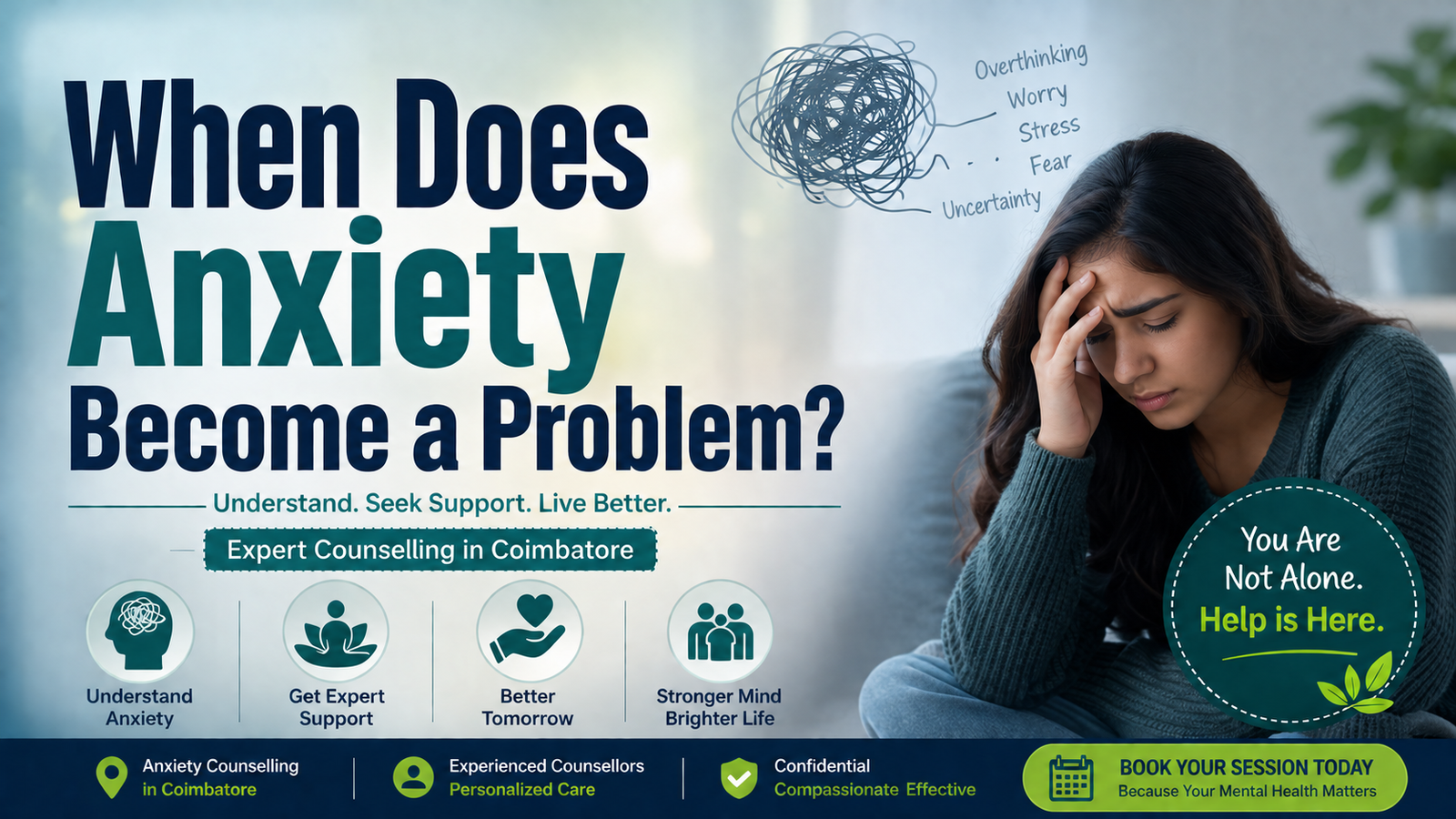
Feeling anxious before an important meeting, examination, interview, or major life event is completely normal. Anxiety is the body’s natural response to stress and uncertainty. However, when anxiety becomes frequent, overwhelming, and starts affecting your daily life, relationships, career, or physical health, it may indicate an anxiety disorder that requires professional support.
At Adhia Foundations, we provide compassionate, evidence-based anxiety counselling in Coimbatore to help individuals regain emotional balance and improve their quality of life. Our experienced psychologists understand that every person’s experience with anxiety is unique and therefore create personalized treatment plans that focus on long-term recovery rather than temporary relief.
What is Anxiety?
Anxiety is a natural emotional response that prepares your body to deal with perceived threats. It activates your “fight or flight” response, making you more alert and cautious.
Occasional anxiety is healthy.
Persistent anxiety that interferes with your everyday functioning is not.
If anxious thoughts continue for weeks or months and prevent you from living normally, seeking professional counselling in Coimbatore can make a significant difference.
When Does Anxiety Become a Problem?
Anxiety becomes a mental health concern when it:
- Occurs almost every day
- Lasts for more than six months
- Feels uncontrollable
- Interferes with work or studies
- Affects relationships
- Causes sleep disturbances
- Leads to panic attacks
- Makes you avoid people or situations
- Impacts physical health
If these symptoms sound familiar, consulting an experienced psychologist can help you identify the underlying causes and begin effective treatment.
Common Symptoms of Anxiety
Emotional Symptoms
- Constant worrying
- Feeling overwhelmed
- Fear of losing control
- Irritability
- Difficulty concentrating
- Feeling restless
- Excessive overthinking
Physical Symptoms
- Rapid heartbeat
- Sweating
- Muscle tension
- Headaches
- Chest tightness
- Difficulty breathing
- Dizziness
- Fatigue
- Digestive issues
Behavioural Symptoms
- Avoiding social situations
- Missing work or college
- Procrastination
- Isolation
- Difficulty making decisions
- Seeking constant reassurance
Common Causes of Anxiety
Many factors contribute to anxiety disorders, including:
Stressful Life Events
- Job pressure
- Financial problems
- Relationship conflicts
- Divorce
- Loss of a loved one
- Academic pressure
Biological Factors
- Family history
- Hormonal imbalance
- Brain chemistry
Lifestyle Factors
- Poor sleep
- Excess caffeine
- Alcohol consumption
- Drug use
- Lack of exercise
Psychological Factors
- Childhood trauma
- Negative thinking patterns
- Low self-esteem
- Perfectionism
Types of Anxiety Disorders
Professional psychologists commonly diagnose:
Generalized Anxiety Disorder (GAD)
Persistent and excessive worry about everyday situations.
Panic Disorder
Sudden panic attacks accompanied by intense fear and physical symptoms.
Social Anxiety Disorder
Fear of being judged or embarrassed in social situations.
Health Anxiety
Persistent worry about having serious medical illnesses.
Phobias
Extreme fear of specific objects or situations.
Separation Anxiety
Difficulty being away from loved ones.
Signs You Should Seek Anxiety Counselling
Professional help is recommended if:
- Anxiety lasts longer than six months.
- Panic attacks occur repeatedly.
- Sleep is regularly disturbed.
- Daily activities become difficult.
- You constantly avoid situations.
- Relationships suffer.
- Work performance declines.
- You feel emotionally exhausted.
- Physical symptoms continue despite medical evaluation.
Early intervention often leads to better recovery and prevents anxiety from becoming more severe.
How Anxiety Affects Daily Life
Untreated anxiety may impact:
Career
- Reduced productivity
- Missed deadlines
- Poor concentration
Relationships
- Frequent misunderstandings
- Emotional withdrawal
- Difficulty communicating
Physical Health
- High blood pressure
- Digestive problems
- Chronic fatigue
- Poor immunity
Emotional Well-being
- Low confidence
- Depression
- Burnout
- Isolation
How Anxiety Counselling Helps
At Adhia Foundations, our counselling sessions focus on understanding the root causes of anxiety rather than simply managing symptoms.
Treatment may include:
- Cognitive Behavioural Therapy (CBT)
- Mindfulness-Based Therapy
- Stress Management Techniques
- Emotional Regulation
- Relaxation Exercises
- Breathing Techniques
- Behavioural Therapy
- Lifestyle Guidance
- Self-confidence Building
- Coping Skills Training
Every counselling plan is tailored to your personal needs and goals.
Self-Help Tips to Manage Anxiety
While professional counselling offers the most effective long-term support, these habits may help reduce mild anxiety:
- Practice deep breathing daily.
- Exercise regularly.
- Sleep 7–8 hours each night.
- Reduce caffeine intake.
- Eat balanced meals.
- Limit screen time before bed.
- Practice meditation.
- Journal your thoughts.
- Stay connected with family and friends.
- Avoid self-diagnosis through social media.
Why Choose Adhia Foundations for Anxiety Counselling in Coimbatore?
At Adhia Foundations, we believe mental wellness is a journey, not a destination.
Our experienced mental health professionals provide:
- Individual counselling
- Anxiety therapy
- Stress management counselling
- Depression counselling
- Relationship counselling
- Trauma-informed therapy
- Emotional wellness programs
- Confidential counselling sessions
- Evidence-based psychological treatment
- Personalized recovery plans
Our approach is compassionate, ethical, confidential, and focused on helping individuals achieve lasting emotional well-being.
Frequently Asked Questions
Can anxiety go away without treatment?
Mild anxiety may improve with lifestyle changes. Persistent or severe anxiety usually benefits from professional counselling and therapy.
What is the difference between stress and anxiety?
Stress is typically linked to a specific situation, while anxiety often continues even after the stressful event has ended.
Is anxiety treatable?
Yes. Most people experience significant improvement through counselling, therapy, healthy lifestyle changes, and, when necessary, medication prescribed by a psychiatrist.
How many counselling sessions are required?
The number of sessions varies depending on the severity of symptoms, personal goals, and progress. Many individuals notice improvement within several sessions when they actively participate in therapy.
Should I consult a psychologist for anxiety?
If anxiety is interfering with your daily life, relationships, sleep, or work, consulting a qualified psychologist is a proactive step toward recovery.
Take the First Step Towards Better Mental Health
Living with constant anxiety can feel exhausting, but you do not have to face it alone. Early support can improve emotional resilience, restore confidence, and help you enjoy life again.
If you are searching for anxiety counselling in Coimbatore, psychologist in Coimbatore, or therapy for anxiety, the experienced team at Adhia Foundations is here to provide compassionate, confidential, and evidence-based care tailored to your unique needs.