
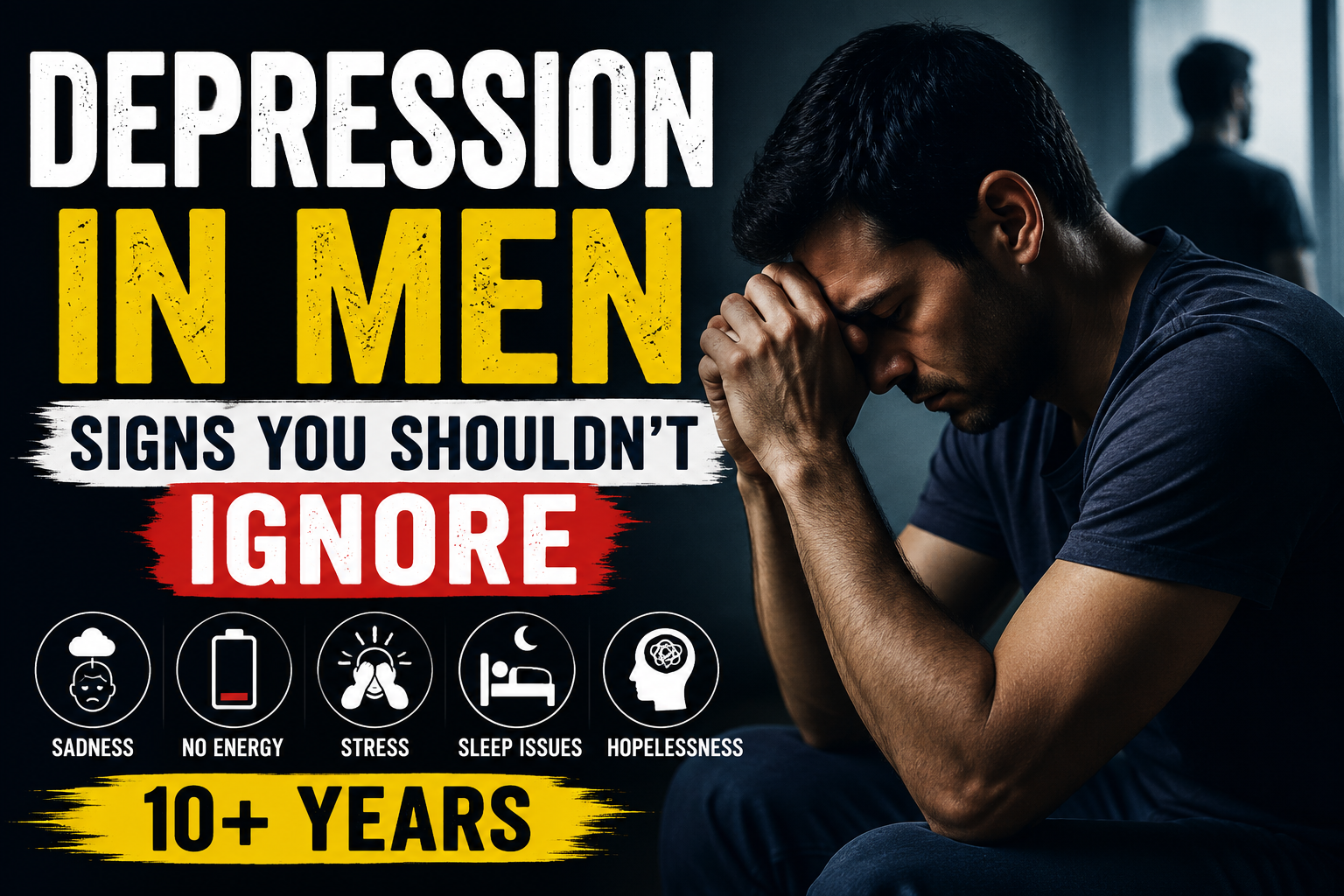
Depression in Men: Signs You Shouldn’t Ignore
Mental health struggles in men are often hidden behind silence, anger, work pressure, or emotional withdrawal. Many men are taught to “stay strong” and suppress emotions, which can delay support and worsen emotional distress over time. Depression in men is real, common, and treatable — but recognizing the signs early is crucial. At Adhia Foundations, we have spent over 10 years supporting individuals, couples, and families through emotional healing, self-discovery, and mental wellness. This article explores the signs of depression in men that should never be ignored, along with practical steps toward recovery and emotional well-being.
Why Depression in Men Often Goes Unnoticed
Unlike the common image of sadness or crying, depression in men can appear differently. Many men experience emotional numbness, irritability, anger, exhaustion, or even physical symptoms instead of openly expressing sadness.
Social expectations often pressure men to:
- Avoid vulnerability
- Suppress emotions
- Handle stress alone
- Equate emotional expression with weakness
As a result, depression may remain undiagnosed for months or even years.
Common Signs of Depression in Men
1. Persistent Irritability or Anger
Men with depression may become unusually frustrated, short-tempered, or aggressive. Instead of sadness, emotional pain may show up as:
- Frequent arguments
- Road rage
- Sudden outbursts
- Constant frustration
This is often one of the most overlooked symptoms.
2. Emotional Withdrawal
A man experiencing depression may slowly disconnect from the following:
- Family conversations
- Friendships
- Social gatherings
- Romantic relationships
He may spend more time alone, avoid communication, or appear emotionally unavailable.
3. Loss of Interest in Activities
One major warning sign is losing interest in things once enjoyed, including:
- Hobbies
- Sports
- Intimacy
- Career goals
- Socializing
This emotional disconnection can affect confidence, relationships, and overall quality of life.
4. Constant Fatigue and Low Energy
Depression is not just emotional — it also affects the body. Men may experience:
- Persistent tiredness
- Difficulty getting out of bed
- Low motivation
- Poor concentration
- Burnout-like symptoms
Many mistake these signs for work stress or physical exhaustion.
5. Changes in Sleep Patterns
Depression commonly disrupts sleep. Signs include:
- Insomnia
- Sleeping excessively
- Restless sleep
- Waking up exhausted
Poor sleep can intensify anxiety, mood swings, and emotional instability.
6. Increased Alcohol or Substance Use
Some men cope with emotional pain through the following:
- Alcohol consumption
- Smoking
- Recreational drugs
- Excessive gaming or screen addiction
These behaviors may temporarily numb emotions but often worsen depression over time.
7. Physical Symptoms Without Clear Medical Cause
Depression can manifest physically through:
- Headaches
- Digestive issues
- Body pain
- Chest tightness
- Reduced immunity
When emotional stress remains unresolved, the body often carries the burden.
8. Feelings of Worthlessness or Failure
Men struggling with depression may silently battle thoughts such as:
- “I’m not good enough.”
- “I’m failing my family.”
- “Nobody understands me.”
- “What’s the point?”
These thoughts can deeply affect self-esteem and emotional resilience.
9. Difficulty Managing Relationships
Depression can create emotional distance and communication struggles within the following:
- Marriages
- Parenting
- Friendships
- Workplace relationships
Partners may notice emotional shutdown, avoidance, or lack of connection.
10. Thoughts of Self-Harm or Hopelessness
In severe cases, depression can lead to:
- Hopelessness
- Feeling trapped
- Thoughts of self-harm
- Suicidal ideation
These signs should never be ignored and require immediate emotional support and professional intervention.
What Causes Depression in Men?
Depression is usually influenced by multiple emotional, psychological, and environmental factors, including:
- Chronic stress
- Career pressure
- Financial responsibilities
- Relationship conflicts
- Childhood trauma
- Emotional neglect
- Major life transitions
- Loneliness and isolation
Hormonal changes, unresolved grief, and long-term anxiety may also contribute.
Why Seeking Help Is a Strength—Not Weakness
One of the biggest myths around men’s mental health is the belief that asking for help is a sign of weakness. In reality, emotional awareness and support-seeking are signs of courage and self-responsibility.
Therapy and counseling can help men:
- Understand emotional triggers
- Improve communication
- Manage stress effectively
- Heal unresolved emotional wounds
- Build healthier relationships
- Regain clarity and confidence
Early support often prevents emotional struggles from becoming overwhelming.
How Therapy Can Help Men Heal
At Adhia Foundations, we offer a compassionate, non-judgmental space where individuals can safely explore their emotional experiences.
Our therapy and coaching approaches integrate:
- Applied psychology
- Emotional intelligence coaching
- Neuroscience-based techniques
- Couple and family therapy
- NLP practices
- Mind-body awareness tools
Every individual’s healing journey is unique, and support is personalized accordingly.
About the Founder of Adhia Foundations
The journey of Adhia Foundations is deeply connected to the vision of Sridevi Baskaran, a mental wellness professional passionate about understanding human emotions, relationships, and personal growth. After completing her B.E. in computer science and working with
organizations like Infosys, Evergreen Investment, and State Street Bank in Boston, she transitioned into psychology and counseling to follow her deeper calling. With a Master’s in Applied Psychology and extensive certifications in emotional intelligence coaching,
neuroscience coaching, NLP, hypnosis, family therapy, and couple therapy, she now helps individuals and families navigate emotional challenges with compassion, science-backed
methods, and clarity. Her vision for Adhia Foundations is rooted in creating safe, judgmentfree spaces where healing and self-discovery can truly begin.
When Should You Seek Professional Help?
It may be time to seek support if:
- Symptoms last more than two weeks
- Daily functioning is affected
- Relationships are suffering
- Emotional numbness feels overwhelming
- Stress feels unmanageable
- You feel persistently hopeless or disconnected
Seeking help early can significantly improve emotional recovery and long-term mental wellness.
Final Thoughts
Depression in men often hides behind silence, stress, anger, or emotional withdrawal. Ignoring these signs can affect not only mental health but also relationships, career, and overall well-being.
The most important thing to remember is this: you do not have to go through it alone. With the right support, awareness, and emotional tools, healing is possible. Recognizing the signs early and reaching out for help can be the first step toward emotional balance, healthier
relationships, and a more fulfilling life.
Frequently Asked Questions (FAQs)
Can men experience depression differently than women?
Yes. Men often display depression through irritability, anger, emotional withdrawal, fatigue, or risky behavior rather than openly expressing sadness.
Is therapy effective for men dealing with depression?
Absolutely. Therapy helps men process emotions, reduce stress, improve coping mechanisms, and strengthen emotional resilience.
What are the early warning signs of depression in men?
Common early signs include mood swings, low energy, sleep disturbances, withdrawal from loved ones, and loss of interest in activities.
Can work stress lead to depression?
Chronic work pressure, burnout, and unmanaged stress can contribute significantly to
depression and emotional exhaustion.
How can family members support a man with depression?
Offer non-judgmental listening, encourage professional support, avoid criticism, and create a safe emotional environment for open conversations.